|
Case Report
Fulminant diffuse alveolar hemorrhage in Weil’s disease: A case report
1 Attending Physician, Internal Medicine Service, Hospital Regional Universitario de Colima, IMSS-Bienestar, Colima, Colima, Mexico
2 Attending Physician, Infectology Service, Hospital Regional Universitario de Colima, IMSS-Bienestar, Colima, Colima, Mexico
3 Attending Physician, Neumology Service, Hospital Regional Universitario de Colima, IMSS-Bienestar, Colima, Colima, Mexico
4 Biostatistician and Research Coordinator, Medical Research Department, Medi-Fi, Biostatistics and Research Consultancy, Guadalajara, Jalisco, Mexico
Address correspondence to:
Héctor Escobedo-López
Km 2.0 Colima-Guadalajara Highway, El Porvenir, Colima, Colima, Zip code: 28085,
Mexico
Message to Corresponding Author
Article ID: 100022Z16HL2026
Access full text article on other devices

Access PDF of article on other devices


How to cite this article
Escobedo-López H, Sánchez-López G, Cruz-Sánchez S, Gutiérrez-Campos ND, Gómez-Zamora CA, Terrones-Lozano A. Fulminant diffuse alveolar hemorrhage in Weil’s disease: A case report. J Case Rep Images Infect Dis 2026;9(1):19–23.ABSTRACT
Introduction: Leptospirosis is a zoonosis with worldwide distribution. Its severe form (Weil’s disease) is characterized by jaundice, renal dysfunction, and hemorrhagic diathesis. Hemorrhagic pulmonary involvement is a lethal, often underdiagnosed complication.
Case Report: A 34-year-old male farmer was admitted for fever, jaundice, and progressive symmetric muscle weakness in the lower limbs. Initial laboratory tests showed severe thrombocytopenia (5000/μL), acute kidney injury (creatinine 5.9 mg/dL), and hyperbilirubinemia. Despite empirical antibiotic management (doxycycline/ceftriaxone), the patient developed acute respiratory failure secondary to diffuse alveolar hemorrhage confirmed by bronchoscopy and imaging. Mechanical ventilation and hemodialysis were required. Serology (microscopic agglutination test) confirmed leptospirosis. The patient died due to pulmonary complications and multiorgan failure.
Conclusion: Leptospirosis should be considered in the differential diagnosis of patients with a febrile syndrome and muscle weakness in endemic areas. The onset of respiratory symptoms should raise concern for the development of alveolar hemorrhage, which carries an ominous prognosis.
Keywords: Acute respiratory distress syndrome, Leptospirosis, Spirochetal jaundice, Weil’s disease
Introduction
Leptospirosis is a zoonotic disease caused by spirochetes of the genus Leptospira [1],[2],[3]. Although most cases are mild, a proportion of patients develop the severe icterohemorrhagic form known as Weil’s disease [2],[4],[5]. In recent years, a clinical phenotype characterized by Diffuse Alveolar Hemorrhage (DAH) has been recognized; it has mortality rates above 50% and often occurs before the classic renal failure develops [6],[7],[8],[9]. We present the case of a young patient with occupational exposure who developed a fulminant course of leptospirosis with severe pulmonary involvement.
Case Report
Subject background and present illness: A 34-year-old male farm worker, resident of a rural area in Veracruz (endemic zone), with no relevant past medical history or substance use, presented with a 7-day illness. The onset was marked by a sensation of an insect bite on the scalp, accompanied by fever up to 39 °C. Over the following four days, he developed progressive, symmetric weakness in the lower limbs that gradually limited his ability to ambulate. Given the neurological presentation, Guillain–Barré syndrome was initially suspected, prompting an emergency visit and subsequent hospital admission.
Physical examination and diagnostic studies: Physical examination was notable for generalized jaundice. Laboratory panel performed at admission revealed pancytopenia with critical thrombocytopenia, meeting multiple organ failure criterion:
- Complete Blood Count (CBC): Hb 11.6 g/dL, platelets 5000/µL, leukocytes 8900/µL.
- Renal function and electrolytes: Creatinine 5.9 mg/dL, urea 175 mg/dL, potassium 3.3 mmol/L, sodium 130 mmol/L.
- Liver function: Total bilirubin 10.2 mg/dL (direct 8.6 mg/dL), Aspartate Aminotransferase/Transaminase Glutamic-Oxaloacetic (AST/TGO) 93 U/L, Alanine Aminotransferase/Transaminase Glutamic-Pyruvic (ALT/TGP) 93 U/L, alkaline phosphatase 143 U/L.
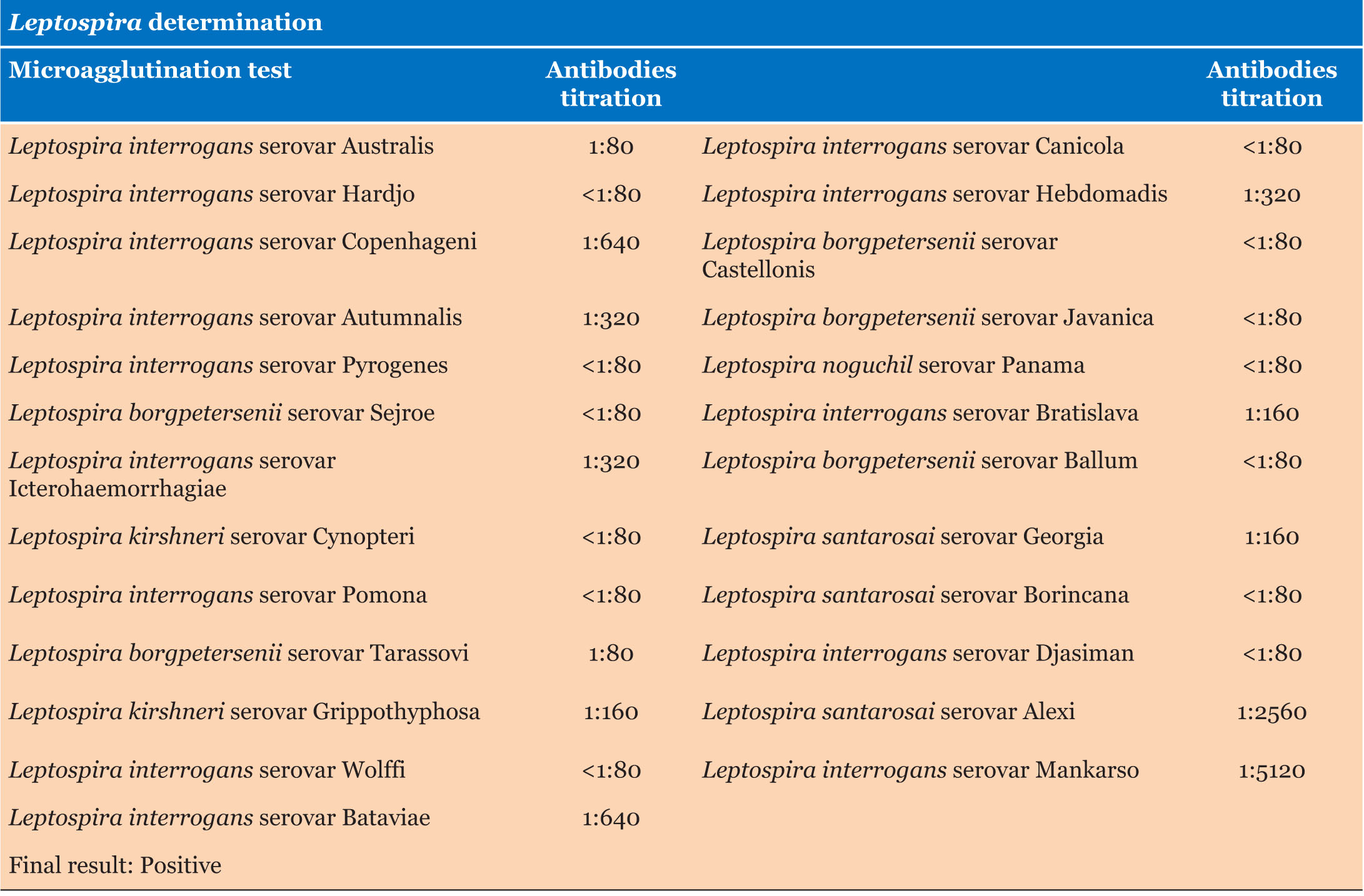
Therapeutic approach and clinical course: Given the epidemiological context and clinical findings, the working differential included rickettsiosis, Lyme disease, and leptospirosis (Weil’s disease). Empiric antimicrobial coverage was initiated with doxycycline (100 mg every 12 hours) and ceftriaxone (2 g every 12 hours), and a microscopic agglutination test (MAT) was requested to confirm etiology.
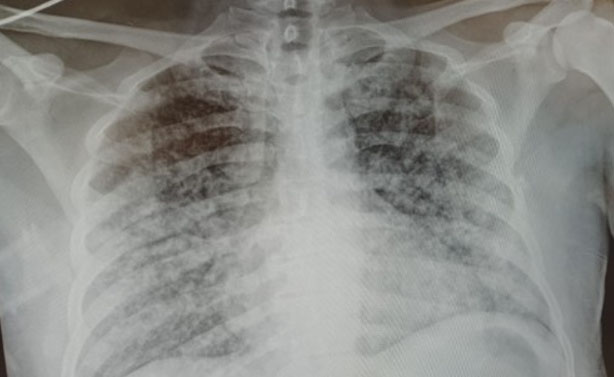
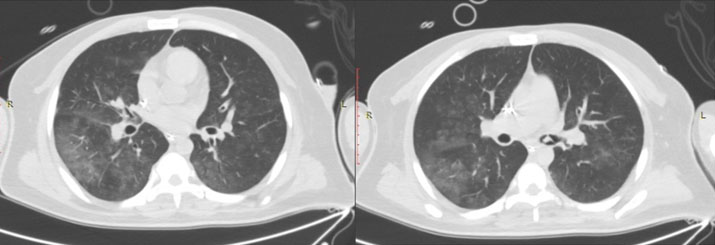
By hospital day 3, the patient’s condition deteriorated acutely. New-onset dyspnea and oxygen desaturation prompted an urgent chest X-ray, which revealed bilateral radiopacities consistent with diffuse alveolar hemorrhage (DAH) (Figure 1). Non-contrast chest computed tomography (CT) confirmed a bilateral ground-glass pattern with hyperdensity in the left bronchus (Figure 2). Arterial blood gas analysis demonstrated severe metabolic acidosis (pH 7.2, PaCO2 35 mmHg, HCO3–14 mEq/L) with a PaO2/FiO2 ratio of 130, necessitating orotracheal intubation and initiation of invasive mechanical ventilation in Assist-Control Volume Control (ACVC) mode, with a positive end-expiratory pressure (PEEP) of 12 cmH2O and FiO2 of 0.80. Organ dysfunction severity was reflected by a Sequential Organ Failure Assessment (SOFA) score of 15. Given progressive anuria and refractory azotemia, a Mahurkar catheter was placed for renal replacement therapy via hemodialysis.
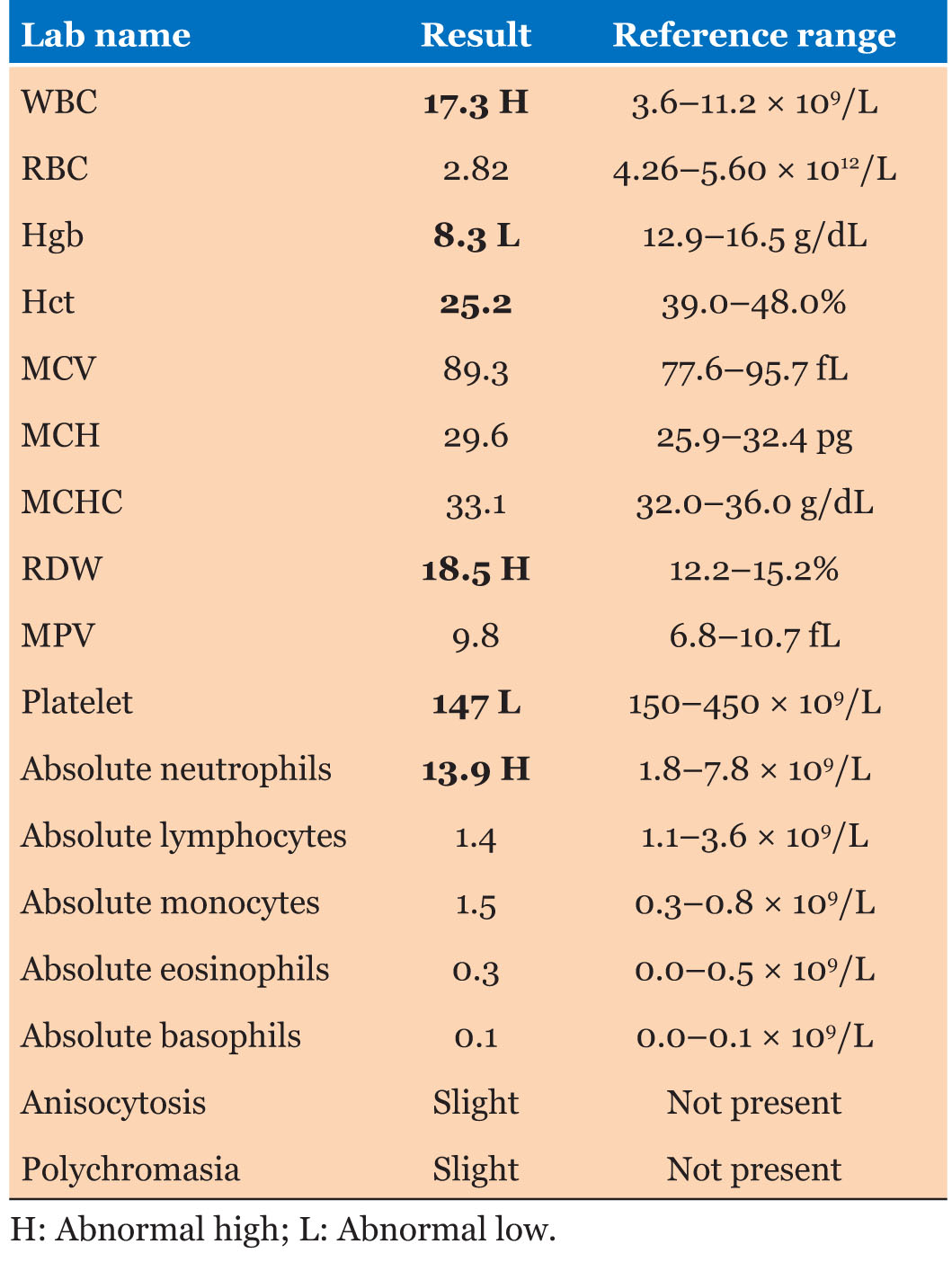
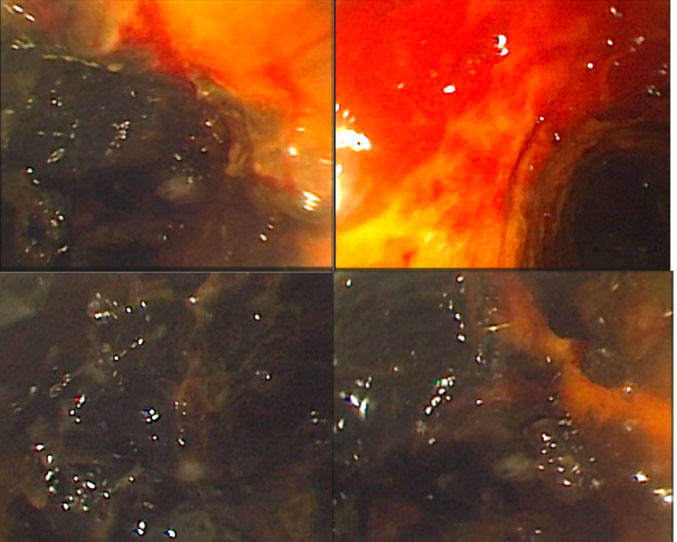
Outcome: The clinical trajectory was unfavorable, with evolution toward severe acute respiratory distress syndrome (ARDS). On the hospital day 13, bronchoscopy confirmed the presence of diffuse active bleeding (Figure 3). On the hospital day 20, the positive report for leptospirosis was received (Table 1). The patient died on hospital day 21 due to mixed shock and multiorgan failure.
Discussion
Leptospirosis is a globally distributed zoonosis with a pleomorphic clinical presentation, posing a significant diagnostic challenge in endemic areas. The case presented illustrates the most severe form of the disease (Weil’s disease), characterized by the triad of jaundice, renal dysfunction, and hemorrhagic diathesis, culminating in fatal Diffuse Alveolar Hemorrhage (DAH) [1],[3],[6],[7],[8],[10],[11].
A distinctive feature of this case was the initial neurological presentation, which mimicked Guillain–Barré syndrome (GBS) due to progressive symmetric weakness in the lower limbs that impaired ambulation. While leptospirosis can cause neurological complications such as aseptic meningitis, flaccid paraparesis is less common and is usually secondary to severe myositis, rhabdomyolysis, or severe hypokalemia. Although our patient had mild hypokalemia (3.3 mmol/L), this alone does not fully account for the magnitude of weakness observed. A direct inflammatory muscle component may have contributed, though the precise pathophysiological mechanism in this case remains uncertain and cannot be established definitively from the available clinical data [2],[7],[8],[10],[11],[12],[13].
Progression to severe pulmonary involvement determined the fatal outcome. Pulmonary manifestations of leptospirosis occur in 20–70% of cases, but massive DAH is an uncommon complication, with case-fatality rates that may exceed 50% even with advanced ventilatory support [1],[11],[12]. In this patient, the sudden onset of dyspnea and bilateral radiopacities on the third hospital day coincides with the immune phase of the disease, in which immune complex deposition and systemic vasculitis play a crucial pathogenic role. Despite management with protective mechanical ventilation and hemodynamic support, progression to refractory hypoxemia (PaO2/FiO2 130) and pneumothorax underscores the aggressiveness of the hemorrhagic pulmonary form [12],[13].
From a hematologic standpoint, the critical thrombocytopenia on admission (5000/µL) is notable. Although thrombocytopenia is a classic finding in leptospirosis, levels below 20,000/µL are exceptional and are strongly associated with a worse prognosis and a higher risk of alveolar bleeding. This finding, together with marked jaundice (total bilirubin 10.2 mg/dL) and acute kidney injury (creatinine 5.9 mg/dL), confirms the clinical diagnosis of a complete Weil’s disease [14],[15].
It is relevant to mention the epidemiological context and the initial confusion with rickettsiosis due to the history of a presumed scalp bite. In rural areas of Mexico, coinfection or clinical overlap among leptospirosis, dengue, and rickettsiosis requires a broad syndromic approach. However, the presence of a marked cholestatic pattern with moderately elevated transaminases [16],[17].
Conclusion
This case highlights the importance of considering leptospirosis in the differential diagnosis of patients with fever and acute muscle weakness, beyond the classic suspicion of Guillain–Barré syndrome. It also underscores the need for strict respiratory monitoring in patients with severe thrombocytopenia, since diffuse alveolar hemorrhage may occur suddenly and catastrophically, and is the leading cause of death in modern icterohemorrhagic leptospirosis.
REFERENCES
1.
Rajapakse S. Leptospirosis: Clinical aspects. Clin Med (Lond) 2022;22(1):14–17. [CrossRef]
[Pubmed]

2.
Zamora AJC, Fonseca DC, López YG. Leptospirosis y enfermedad de Weil. Revista Médica Sinergia 2020;5(3):e346. [CrossRef]
3.
Soo ZMP, Khan NA, Siddiqui R. Leptospirosis: Increasing importance in developing countries. Acta Trop 2020;201:105183. [CrossRef]
[Pubmed]
4.
Chaparro SR, Bertel RT, Yepes AJO. Síndrome de Weil; manejo integral desde la unidad de cuidados intensivos. Rev Soc Parag Nefrol 2025;3(1):30–6. [CrossRef]
5.
Bradley EA, Lockaby G. Leptospirosis and the environment: A review and future directions. Pathogens 2023;12(9):1167. [CrossRef]
[Pubmed]
6.
Monroy-Díaz ÁL, Vargas-Arias JA, Filippo-Iriarte GD, Quimbaya-Ramírez JJ. Leptospirosis en reservorios animales: una revisión de tema. Rev Lasallista Investig 2020;17(2):266–79.
7.
Hernández-Rodríguez P, Pabón LC, Rodríguez MF. Leptospirosis, una zoonosis que impacta a la salud: Diagnóstico, tratamiento y nuevas alternativas de control. Rev Cubana Med Trop 2021;73(1):1–24.
8.
Pinto GV, Senthilkumar K, Rai P, Kabekkodu SP, Karunasagar I, Kumar BK. Current methods for the diagnosis of leptospirosis: Issues and challenges. J Microbiol Methods 2022;195:106438. [CrossRef]
[Pubmed]
9.
Wickramasinghe M, Chandraratne A, Doluweera D, Weerasekera MM, Perera N. Predictors of severe leptospirosis: A review. Eur J Med Res 2025;30(1):445. [CrossRef]
[Pubmed]
10.
Barbosa AS, Patarakul K, Isaac L. Editorial: Leptospirosis: Pathogenesis, clinical and epidemiological aspects. Front Cell Infect Microbiol 2023;13:1210178. [CrossRef]
[Pubmed]
11.
Saliba J, Vassallo C, Saliba J, Pace Bardon M. Leptospirosis: A clinical and diagnostic challenge. BMJ Case Rep 2024;17(5):e256905. [CrossRef]
[Pubmed]
12.
Uribe-Restrepo P, Munoz-Zanzi C, Agudelo-Flórez P. Kidney injury biomarkers in leptospirosis. Rev Soc Bras Med Trop 2023;56:e0260–2022. [CrossRef]
[Pubmed]
13.
Petakh P, Rostoka L, Isevych V, Kamyshnyi A. Identifying risk factors and disease severity in leptospirosis: A meta-analysis of clinical predictors. Trop Doct 2023;53(4):464–9. [CrossRef]
[Pubmed]
14.
Vásquez JVI, Roche GB, Urgilez MR, Urgilez AR. Leptospirosis factores de riesgo, diagnóstico y manejo actualizado. Journal of American Health 2023;6(2):14.
15.
Barrera Cepeda DL, Torres Martínez DS, Orjuela Vargas L. Factores de riesgo de leptospirosis y sus métodos diagnósticos. Revista Med 2022;30(2):77–89.
16.
Torres JMT, Sánchez JGS, Guartá RCD, Macía JJP. Síndrome de Weil, leptospirosis ictérica. Mediciencias UTA 2020;4(1):68–75.
17.
Rajapakse S, Fernando N, Dreyfus A, Smith C, Rodrigo C. Leptospirosis. Nat Rev Dis Primers 2025;11(1):32. [CrossRef]
[Pubmed]
SUPPORTING INFORMATION
Acknowledgments
Artificial intelligence (AI) use in the article:
Anthropic Claude Sonnet 4.6 (Released on 17-Feb-2026) was used to verify the translation and language used in the manuscript text.
Héctor Escobedo-López - Conception of the work, Design of the work, Acquisition of data, Analysis of data, Drafting the work, Revising the work critically for important intellectual content, Final approval of the version to be published, Agree to be accountable for all aspects of the work in ensuring that questions related to the accuracy or integrity of any part of the work are appropriately investigated and resolved.
Guillermo Sánchez-López - Conception of the work, Design of the work, Acquisition of data, Analysis of data, Drafting the work, Revising the work critically for important intellectual content, Final approval of the version to be published, Agree to be accountable for all aspects of the work in ensuring that questions related to the accuracy or integrity of any part of the work are appropriately investigated and resolved.
Saulo Cruz-Sánchez - Conception of the work, Design of the work, Acquisition of data, Analysis of data, Drafting the work, Revising the work critically for important intellectual content, Final approval of the version to be published, Agree to be accountable for all aspects of the work in ensuring that questions related to the accuracy or integrity of any part of the work are appropriately investigated and resolved.
Nelson-Daniel Gutiérrez-Campos - Conception of the work, Design of the work, Acquisition of data, Analysis of data, Drafting the work, Revising the work critically for important intellectual content, Final approval of the version to be published, Agree to be accountable for all aspects of the work in ensuring that questions related to the accuracy or integrity of any part of the work are appropriately investigated and resolved.
Carlos-Alberto Gómez-Zamora - Conception of the work, Design of the work, Acquisition of data, Analysis of data, Drafting the work, Revising the work critically for important intellectual content, Final approval of the version to be published, Agree to be accountable for all aspects of the work in ensuring that questions related to the accuracy or integrity of any part of the work are appropriately investigated and resolved.
Alejandro Terrones-Lozano - Conception of the work, Design of the work, Acquisition of data, Analysis of data, Drafting the work, Revising the work critically for important intellectual content, Final approval of the version to be published, Agree to be accountable for all aspects of the work in ensuring that questions related to the accuracy or integrity of any part of the work are appropriately investigated and resolved.
Guaranter of SubmissionThe corresponding author is the guarantor of submission.
Source of SupportNone
Consent StatementWritten informed consent was obtained from the patient for publication of this article.
Data AvailabilityAll relevant data are within the paper and its Supporting Information files.
Conflict of InterestAuthors declare no conflict of interest.
Copyright© 2026 Héctor Escobedo-López et al. This article is distributed under the terms of Creative Commons Attribution License which permits unrestricted use, distribution and reproduction in any medium provided the original author(s) and original publisher are properly credited. Please see the copyright policy on the journal website for more information.